

What is an anatomical bridle? Function and benefits

Table of contents

An anatomical bridle is specifically designed to reduce pressure on sensitive areas of the horse’s head and improve comfort. This often results in a better contact and more relaxation during riding. In this blog, you will discover what an anatomical bridle is, how it works, and what to look for when choosing the right model for your horse.
What is an anatomical bridle?
An anatomical bridle follows the natural contours of the horse’s skull. As a result, pressure points on sensitive areas such as behind the ears, along the nerve pathways, and around the jaw are minimized as much as possible. Unlike traditional bridles, which often run straight across these areas, an anatomical bridle is designed to distribute pressure more evenly and allow for greater freedom of movement.
Why choose an anatomical bridle?
An anatomical bridle reduces pressure on sensitive areas of the horse’s head and provides more comfort during riding. This is why more and more riders are choosing an anatomical design. It allows you to experience a better partnership with your horse.
Benefits of an anatomical bridle
The main benefits of an anatomical bridle for your horse at a glance:
- Reduced pressure on sensitive areas such as behind the ears and along nerve pathways
- Increased comfort for the horse during riding
- Improved contact and acceptance of the bit
- Greater freedom of movement and relaxation in the body
Difference compared to a traditional bridle
To fully understand these benefits, it is important to look at the difference between anatomical and traditional bridles.
In the image below, you can clearly see the difference between a traditional and an anatomical bridle, where the cut-back headpiece does not put pressure on the ears and follows the contours of the horse’s head.
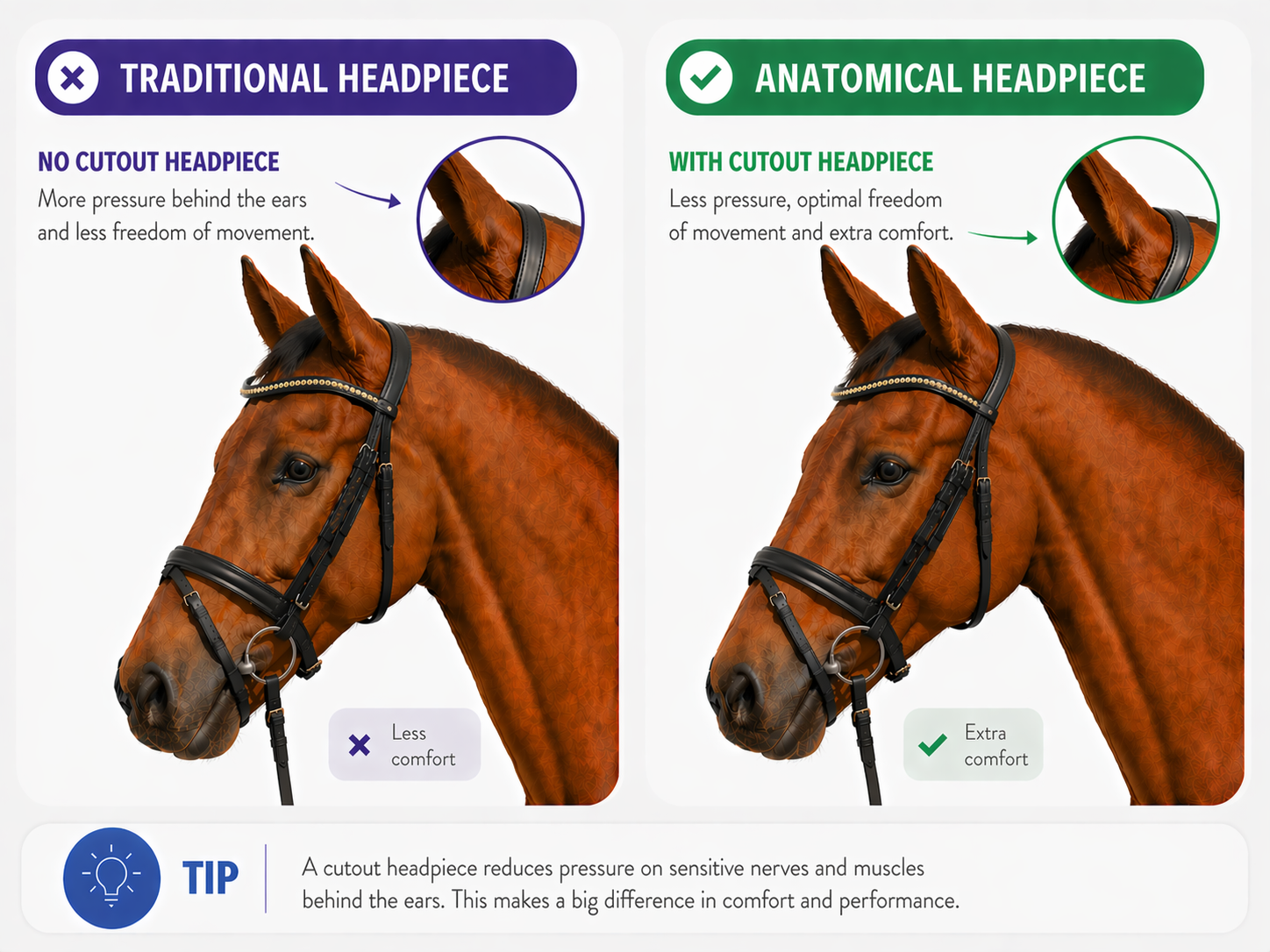
Traditional bridles often consist of straight leather components that run across sensitive areas of the horse’s head. This can lead to pressure points, for example around the ears or nose, which can negatively affect breathing and relaxation. An anatomical bridle, on the other hand, is designed to reduce this pressure. By taking into account the positioning of nerves, blood vessels, and bone structures, cut-outs and softly padded sections are strategically placed. This allows pressure to be distributed more evenly, enabling the horse to move more freely. These benefits contribute to a comfortable, relaxed, and healthy horse, and ultimately to better performance by reducing riding-related issues.
Anatomical bridles in top-level sport
These bridles are also widely used at the highest levels of dressage, show jumping, and eventing. Riders such as Isabell Werth, Julia Krajewski, Ingrid Klimke, and Marcus Ehning use anatomical bridles. Some of them are also involved in the development of various models.
What does an anatomical bridle mean for your horse?
Now that you understand the benefits of an anatomical bridle, it is important to consider what this means in practice for your horse. By reducing pressure points on the head, your horse often experiences greater comfort and relaxation during riding.
In practice, this is reflected in a horse that moves more freely and loosely. You will also notice more relaxation in the neck and improved contact, as horses tend to accept the bit more easily. Because the horse is not physically restricted, this not only affects the body but also its mental state. This creates more calmness, leading to a better partnership between rider and horse. A relaxed horse can move and perform more easily, forming the foundation for effective and enjoyable training. An anatomical bridle can contribute to this by supporting your horse’s comfort and freedom of movement. Browse our range of anatomical bridles and discover which model best suits your horse.
Frequently asked questions about anatomical bridles
1. Which anatomical bridle suits my horse?
This depends on the discipline you practice and your horse’s specific head shape. Factors such as sensitivity behind the ears, around the jaw, teeth, or nose play an important role. Not sure which model suits your horse best?
Not sure which anatomical bridle suits your horse best? Feel free to message us on WhatsApp – we’re happy to help and offer personal advice. Or explore our blog on the different models.
2. What are riders’ experiences with anatomical bridles?
Riders often report that their horse shows more relaxation and a steadier contact. The bit is also accepted more easily, resulting in improved communication during riding. Models with a cut-back headpiece often score highly in terms of comfort and pressure distribution.
3. What makes an anatomical bridle comfortable for a horse?
Comfort mainly depends on fit and finishing. A good anatomical bridle takes into account sensitive areas such as behind the ears and along nerve pathways. Soft leather, a cut-back headpiece, and a well-positioned noseband all contribute to optimal pressure distribution. For example, if your horse is sensitive to a traditional noseband, a higher-positioned model can be a good alternative, as it reduces pressure around the teeth.
4. Is an anatomical bridle suitable for every horse?
In most cases, an anatomical bridle is suitable for nearly every horse, especially those that are sensitive around the head. However, it is important to consider your horse’s individual needs and choose the right model accordingly. Even an anatomical bridle that does not fit properly can still create pressure. Read our blog about the fit of anatomical bridles to ensure the bridle properly follows your horse’s contours and provides maximum comfort.
5. What is the best-selling anatomical bridle?
One of the best-selling anatomical dressage bridles is the Passier Blue Spirit bridle. This sporty model is made from high-quality leather and offers a close, comfortable fit. The ergonomically shaped and extra-wide headpiece ensures optimal pressure distribution. This bridle is available with a combined noseband or a flash noseband, depending on your preference.
Looking for an anatomical bridle for show jumping? The Trust Amsterdam bridle is a popular choice. This model features an anatomically shaped headpiece and an effective noseband, providing comfort and stability while riding.
Prefer a bridle with only an anatomical headpiece? The Trust Knokke bridle, Trust Calgary bridle, and Trust Hamburg bridle are all high-quality options. The Trust Oslo bridle with a Mexican noseband is also an interesting option for riders seeking extra stability and control during jumping.

Ellen van Asselt is the founder of Ridershouse, a brand focused on equestrian sports and everything related to it. The idea for Ridershouse originated in 2007 from her own experience in the equestrian world, where she developed a passion for combining the world of horses with fashion.
Ridershouse was born out of the desire to offer high-quality, fashionable, and functional products such as caps, competition jackets, and boots for riders and their horses, with attention to both aesthetics and the well-being of the animal.